
A good or bad customer experience can be the difference between the success or failure of a business relationship because if the first interaction has been negative, it is unlikely to be repeated. As you know, marketing, its strategies and channels have evolved a lot in the last decade and, currently, especially if we refer to online channels, experience is the key piece for the exponential development of a business. This is why there is an increasing demand for expert professionals in UX, UI, reputation, help support and, ultimately, all positions indirectly related to customer experience.
However, to improve the customer experience, we must understand the stages the user goes through, the types of interactions they have with the company and how to strengthen the relationship. Are you interested? Walk with us through the customer experience map in this post!
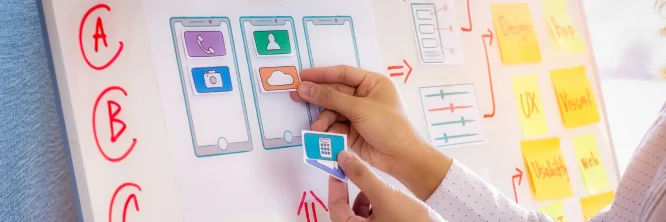
What is the customer experience map and how can it help us improve the customer journey?
A happy customer is a satisfied customer who repeats a purchase, but this is not accidental, for the magic to happen we must guide the user along the path that we have prepared for him and his experience, which is why it is so important to know what the customer map consists of. user experience and how to map it.
The user experience map is a visual tool that represents the interactions that a user has with a product, service or system throughout their journey. This map details the different stages that the user goes through, from the discovery of the product to its continued use or eventual abandonment; Therefore, it is very useful to understand the user’s needs, emotions, motivations and points of friction in each phase of their interaction.
Steps to create a customer experience map
The main objective of the customer experience map is to provide a comprehensive view of the user experience, allowing design, development and marketing teams to identify opportunities for improvement and optimization to deliver a more satisfying and user-focused experience. Generally, this map is represented graphically with timelines and key points of contact between the user and the product/service, showing their perceptions, actions and possible obstacles.
Below, we explain the key points that, yes or yes, the customer experience map must include:
- Research: The user searches for additional information about the product or service to understand its features, functionalities, benefits and prices.
- Purchase/Acquisition: the moment in which the user makes the transaction to purchase the product or service, whether online, in a physical store or other purchasing channel.
- Use/Experience: the phase in which the user actively uses the product or service, experiencing its operation, quality, ease of use and satisfaction with it.
- Support/Assistance: situations in which the user may require help, technical assistance or support to resolve problems, or questions or receive guidance during or after using the product or service.
- Loyalty: the long-term relationship between the user and the brand, where the aim is to create a positive experience that generates loyalty, trust and desire to repeat the interaction.
- Abandonment/Desertion: the possibility that the user decides to stop using the product or service, whether due to dissatisfaction, changes in needs or preferences, among other reasons.
How to improve the weak points of your user experience map?
This map is very useful to detect what is being done well and what is not. Let’s focus on what is done wrong: how to detect it? How to solve it? Well, although each business and each business objective is different, there are common points, such as, for example lack of clarity in communication, a complicated or unintuitive interface, slow loading times, difficulties in navigation, lack of user support or assistance, and complex purchasing or registration processes. Additionally, lack of customization and lack of updates can be common flaws in the user experience.
To improve the previously mentioned pain points of your user experience map, start by identifying problem areas through user feedback and data analysis. Develops user-centered solutions, optimizing usability, effective communication and offering proactive support. Lastly, don’t forget to perform continuous testing to constantly iterate and improve the user experience.
Also you can read about the following topics: