
Kindness, common sense, sensitivity, reasoning… all of these are characteristics of the human being that encompass empathy, the ability that makes us better people because it allows us to put ourselves in the place of another. If you also believe that a better world can be built by promoting empathy from an early age, keep reading this post! In it, we will talk about how this quality is reflected in the different facets of life, how to improve it and work on it. In addition, we will help you create your own empathy map.
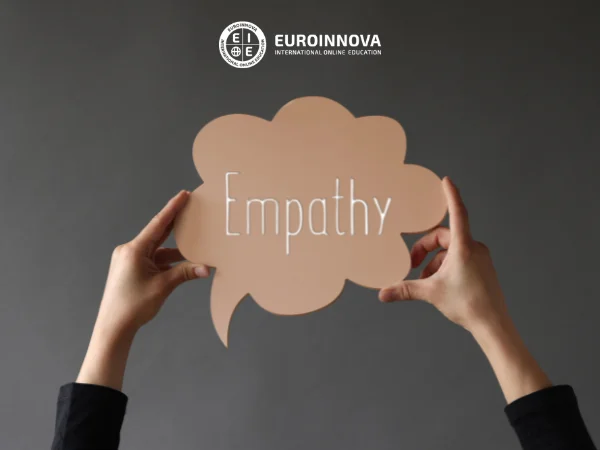
Let’s start at the beginning: What is empathy?
The definition of empathy is known as the ability to understand and share the feelings and emotions of other living beings, putting ourselves in their place and showing concern for their well-being. This ability allows us to connect emotionally with others, perceive their needs, understand their reactions, and respond in an understanding and supportive manner. That is why it is said that empathy makes us better people.
How and where does empathy originate?
To understand where this ability comes from, we have to go back to its origins. Basically, empathy is another of the primitive survival mechanisms, since the feeling of protection and kindness towards others guarantees the well-being of the group. However, it is one of the most complex and developed qualities of human beings, since the more evolved a society is, the more empathy it has with others.
Empathy can be studied from different aspects, such as:
- Biological: Some research suggests that empathy may be related to biology and neuroscience. Areas of the brain, such as the anterior cingulate cortex and the mirror neuron system, have been identified as playing a role in empathy.
- Child development: The ability to empathize begins to develop in childhood, as children learn to recognize and respond to the emotions of others. Education and upbringing can influence the formation of empathy.
- Experiential: Life experiences, including interactions with other people and the situations we face, can influence our ability to empathize. Empathy develops and improves throughout life as we gain a deeper understanding of human emotions and relationships.
- Cultural and social: The cultural and social environment in which we grow up and live can also influence our empathy. Social norms and cultural expectations can encourage or limit the expression of empathy.
What is the empathy map and what is it for?
If we go to the business level, since at Educa.Pro we are experts in promoting the talent of work teams, we find the empathy map, an ideal tool for marketing departments. The goal of this is to help design, marketing and development teams put themselves in the user’s shoes and understand their perspective more effectively. Through graphics, it is possible to more deeply understand the needs, desires, emotions and thoughts of a specific group of people, known as “user” or “client.”
The empathy map includes sections or areas that represent key aspects of the user’s experience, such as their thoughts and feelings, what they see and hear, what they say and do, and their needs and wants. Teams use this tool to collect qualitative data about users through market research, interviews, surveys, or other techniques.
Key questions that should appear in your empathy map template
To find the right solutions, you must ask the right questions. These are some of the most important ones:
What do users think and feel?
- What are your thoughts, concerns and goals?
- What emotions do they experience in relation to the problem or need they are trying to solve?
- What do users see and hear?
What visual or auditory information influences them?
- Where do they look for relevant information?
- What do users say and do?
How do they express themselves about the topic or problem?
- What are your usual actions or behaviours in relation to the problem?
- What are the needs and desires of the users?
What are they really looking to satisfy?
- What are your goals and aspirations in relation to the product or service?
- What are the obstacles and frustrations you face?
What difficulties do you encounter when trying to solve the problem?
- What obstacles prevent you from achieving your goals?
- What solutions are you considering or using?
- What alternatives or competitors are you evaluating or using?
- How do they perceive the existing solutions?
We hope you liked this post about empathy and how to guide it towards the area of marketing. As you know, competition between companies is increasingly high and we need to look for factors that make us stand out and differentiate us. By promoting empathy we are able to better understand our audience and, therefore, better offer what they want, meet their expectations and align ourselves with their values.
You can also read about: